An excellent movie, full of pathos. At the climax, there's a fantastic moment where the camera lingers on Paul Hunham (Paul Gimatti) as he realizes, in an instant, that if he sacrifices everything he's worked for, he can accomplish something momentous. This reminded me of nothing so much as the end of Bridge on the River Kwai, where Colonel Nicholson (Alec Guinness) has the same flash of realization before trying to blow up the bridge.
By far inferior to that early hallmark of film noir, The Maltese Falcon. Marlowe is too much of a hero in this one, and the plot is needlessly tangled with insufficient payoff.
For the first half of the 17th century and then some, Morocco was in a pretty dismal state. Here's my game world wiki writeup about what was going on there:
I watched this as part of my "curriculum" for movies featuring intrigue. Although I've given this a star rating, as with previous entries this is less a review and more an analysis of character interactions to improve my D&D Dungeon Mastering skills.
The idea of watching movies to study intrigue was inspired by this Tao of D&D post, and subsequent discussion on Alexis Smolensk's Patreon. As always, if you care about the cutting edge of roleplaying games, you need to read Alexis's blog. Once you see how much you can learn from the millions of words he's given away for free, you'll understand why I send him some cold hard cash each month to get just a little extra.
A coincidence involving a book club led me to make the acquaintance of David McEnulty, one of the two people working on Convoke, an RPG support application which has just entered (very early) beta testing. McEnulty said he'd read my master's thesis and wanted to get my opinion of his app. We had a pleasant video call that lasted almost three hours. I've already privately given him feedback on design, functionality, and marketing aspects of the tool. Below, I explain what it is and assess how applicable it seems to be for the average DM.
What Convoke Is
Convoke is an RPG support application designed to let the DM and players carry out certain parts of gameplay in between a typical group's regularly-scheduled game sessions. DM-facing functionality includes:
I've invented a new exercise to work on my ability to imagine what each and every NPC in a D&D setting might be thinking, and to strengthen my powers of description.
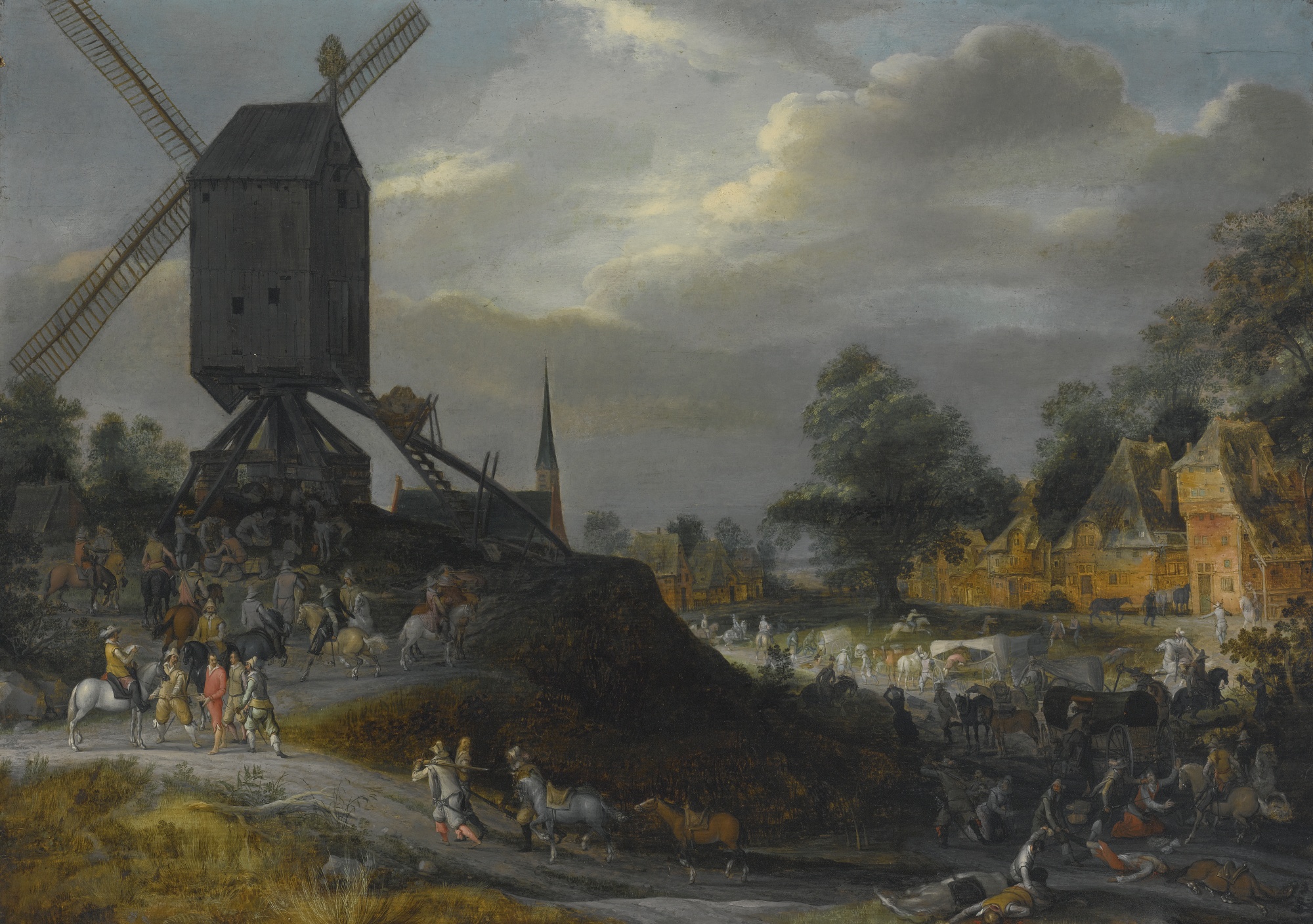
Here we have Pieter Meulener's painting Sack of a Flemish Village by Spanish Soldiers, painted circa 1654. (Sorry the quality isn't great when zoomed in; it's the best version I could find.)
Now, look at these closeups, where I've labeled several people with numbers. In this post, I've imagined snippets of those characters' thoughts, speech, and/or actions, which befit the events of this painting, and the battle that preceded them.